
OPR · Series and size selection
The clinician selects from existing product series and sizes, checks fit and reviews progress. “Progressive” does not mean that every patient follows the same model sequence.
OPR · PREFABRICATED RANGE
OPR is FEITA Group’s prefabricated progressive silicone appliance brand. Products are manufactured in established series and sizes, with selection based on the individual patient’s oral condition.
The clinician selects from existing product series and sizes, checks fit and reviews progress. “Progressive” does not mean that every patient follows the same model sequence.
OER is designed and made using individual oral records and the clinician’s requirements. See the OER range when a customized design is needed.
Explore the rangeDescriptions and specifications are translated from the FEITA product catalogue. Reference ages are guides only: select by clinical assessment, dentition and fit, and follow the applicable product instructions.
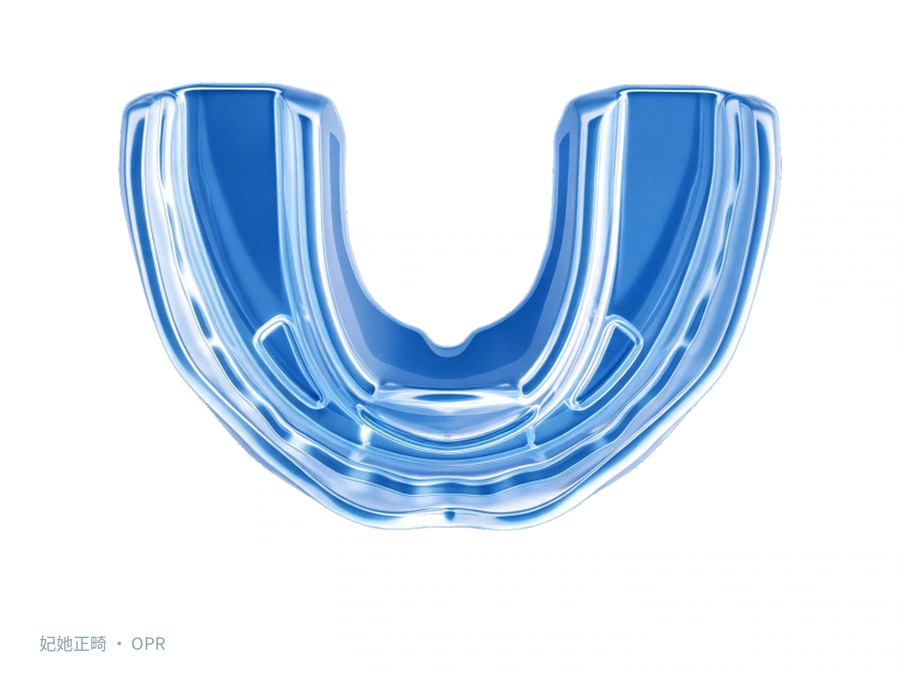
Designed for selected early anterior crossbite cases, with dental guidance and functional features.
Structure: Buccal shields, lip bumpers, guiding grooves, a tongue guide and upper and lower labial ridges combine perioral-functional and dental-guidance features.
Sizes: Small: reference age 3–6; medium: 6–9; large: 9–12; extra-large: larger dental arches.
Use and review: For clinician-assessed functional or dentoalveolar anterior crossbite and selected mild Class III presentations. Marked skeletal mandibular prognathism, severe skeletal Class III, or inability to retrude the mandible to an edge-to-edge position requires further specialist assessment.
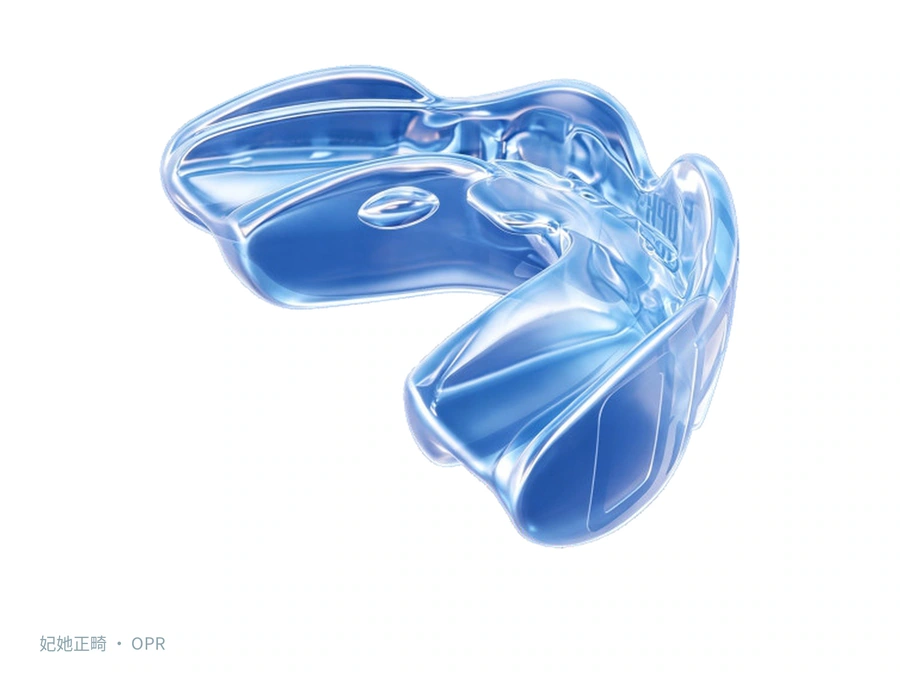
A series for clinician-assessed increased overjet and related mandibular guidance requirements.
Structure: Upper and lower positioning features, a tongue guide and small bilateral tongue supports provide mandibular guidance and tongue-position cues.
Sizes: JVD-S: reference age 3–5; JVD-M: 6–9; JVD-L: 9–12.
Use and review: Selection for increased overjet and mandibular-retrusion Class II presentations depends on arch size, dental development and clinical examination. Follow the prescribed wear plan and review schedule.
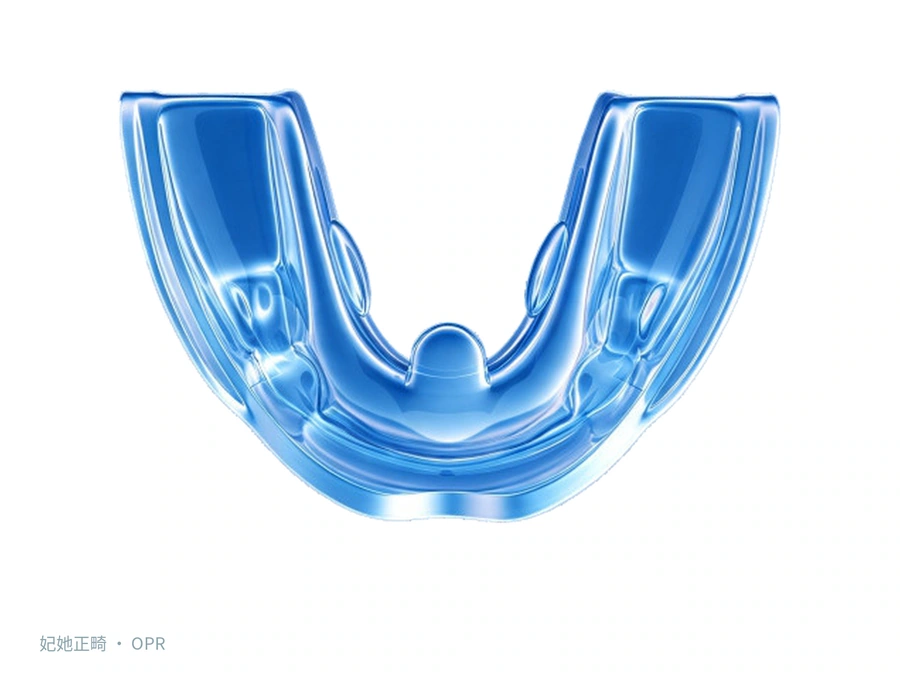
Anterior support and guiding features for selected low-angle and deep bite presentations.
Structure: The anterior region has no separate individual tooth sockets. A thickened support area provides bite support, while the posterior region allows room for adjustment and guidance.
Sizes: JVE-M and JVE-L. Select by arch dimensions, dentition stage and clinical assessment.
Use and review: For clinician-confirmed growing low-angle cases in which bite opening is appropriate. Mandibular-guidance objectives differ between increased-overjet and anterior-crossbite cases and must be planned separately.
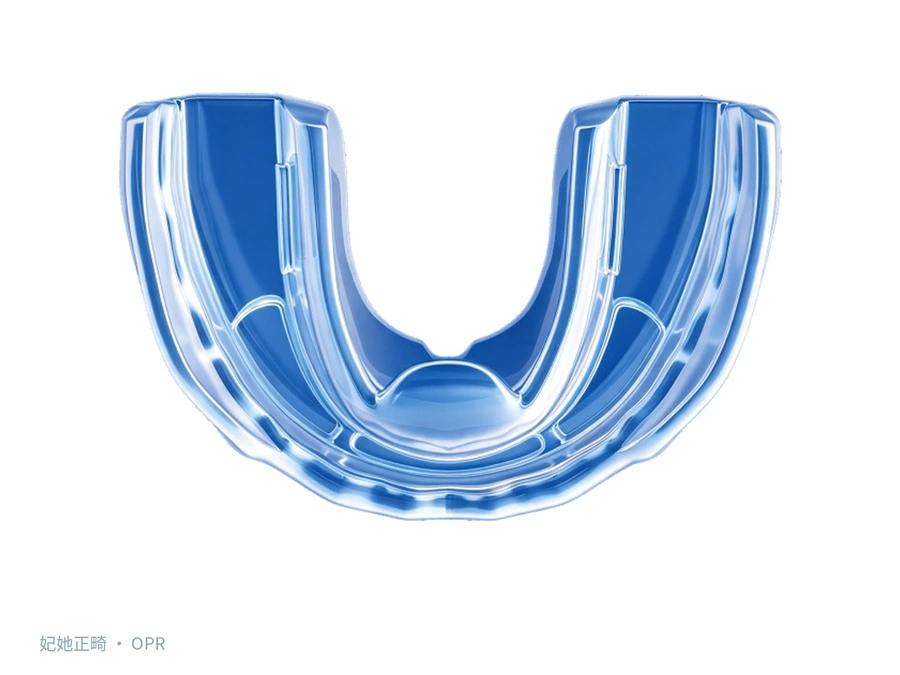
Posterior guidance features for selected functional mandibular shifts and occlusal discrepancies.
Structure: Posterior guiding grooves and upper and lower posterior lingual ridges guide seating and occlusal contact, with attention to the bite path and dental midlines.
Sizes: JW-M: reference age 6–9; JW-L: 9–12.
Use and review: Distinguish dental, functional and skeletal factors before selection. Reviews should assess molar relationships, bilateral contacts and dental midlines.
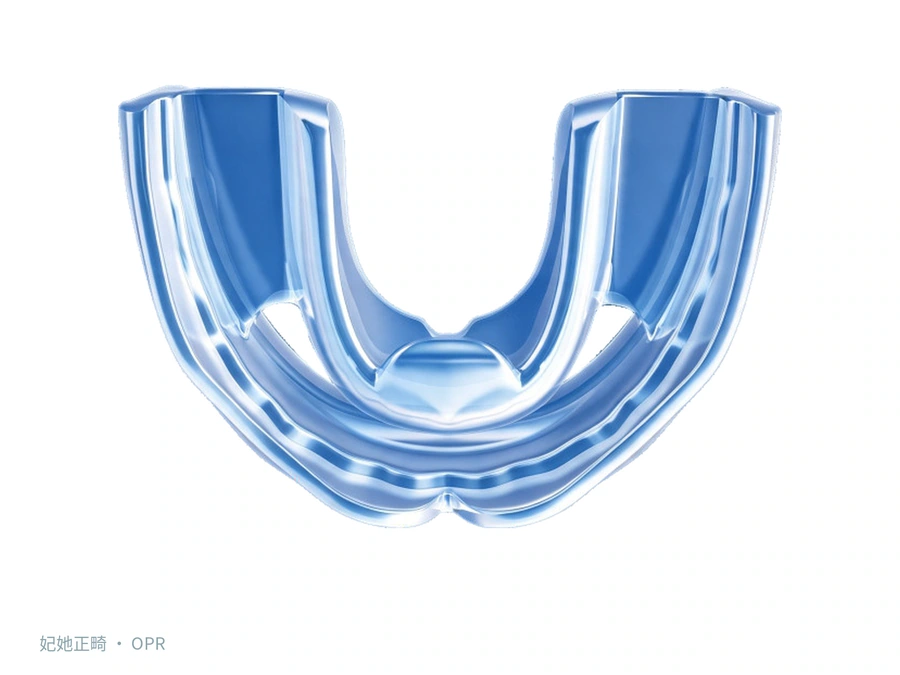
A series combining tooth positioning and tongue guidance features for selected combined presentations.
Structure: Dental positioning is combined with tongue-position and perioral-functional guidance when anterior crossbite and open bite coexist.
Sizes: JCA-M: reference age 6–9; JCA-L: 9–12.
Use and review: Assess dental and functional factors, persistent sucking and abnormal resting tongue position. Marked skeletal discrepancies require further assessment of combined treatment needs.
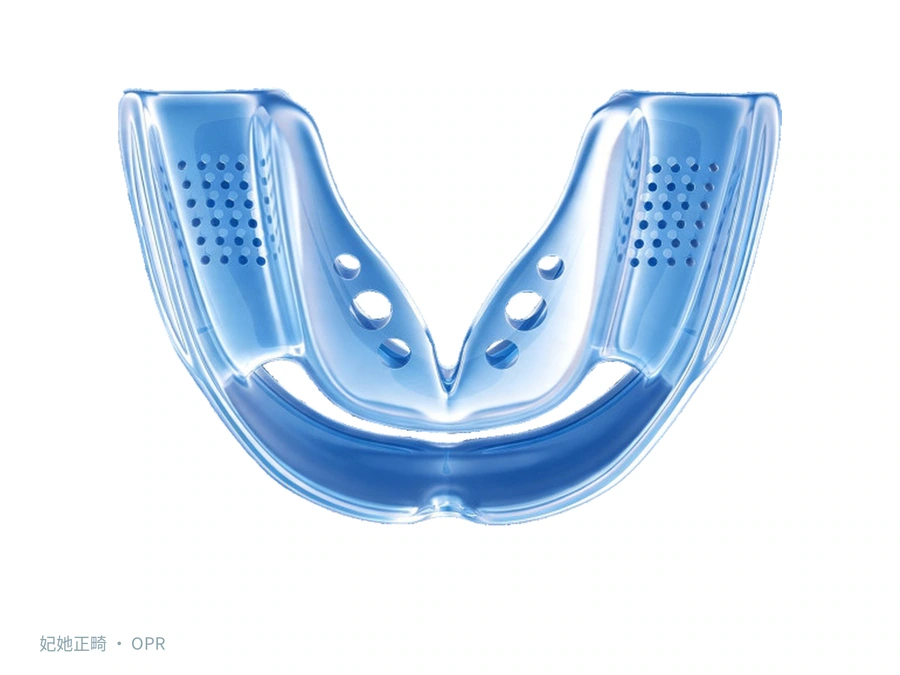
An anterior opening and posterior elastic design for clinician-planned open bite management.
Structure: An opening extends across the anterior canine-to-canine region. Elastic openings on the posterior occlusal surfaces and the flexible body provide support and guidance.
Sizes: JP-S: reference age 6–8; JP-M: 8–10; JP-L: 10–12.
Use and review: Assess the open-bite objectives, anterior and posterior vertical guidance, habit management and any combined treatment. Mandibular-guidance direction must be considered separately for protrusive and crossbite presentations.
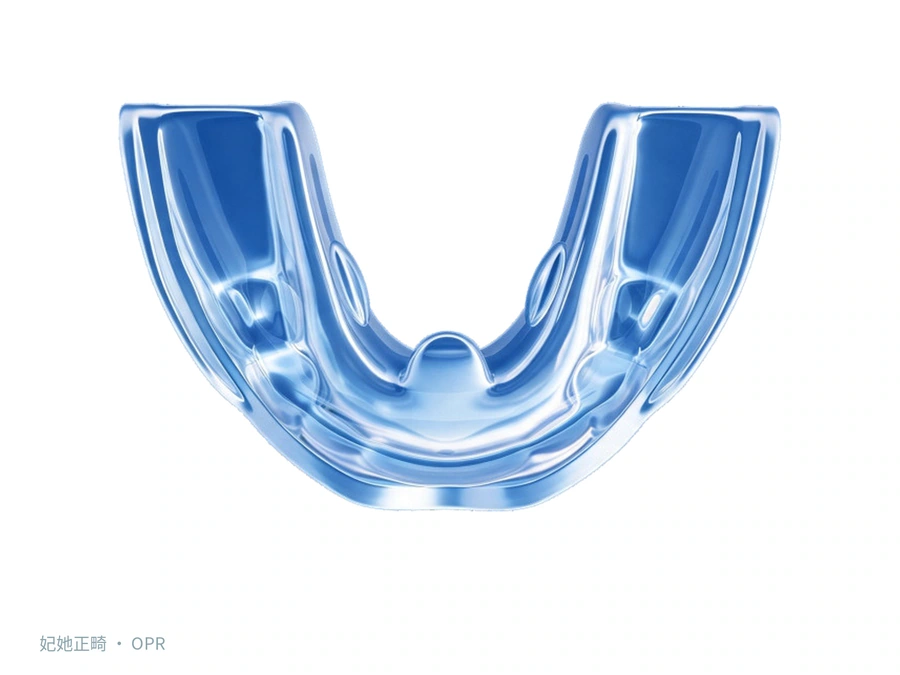
Guiding grooves and positioning features designed for the transition from primary to permanent teeth.
Structure: Guiding grooves and positioning features support tooth seating and eruption guidance during the transition to permanent teeth.
Sizes: TK-M: reference age 6–8; TK-L: 8–10.
Use and review: Select using the actual eruption sequence, arch size and permanent-tooth development. Retained teeth, substantial space shortage, ectopic eruption or impaction require a diagnosis and appropriate management plan.
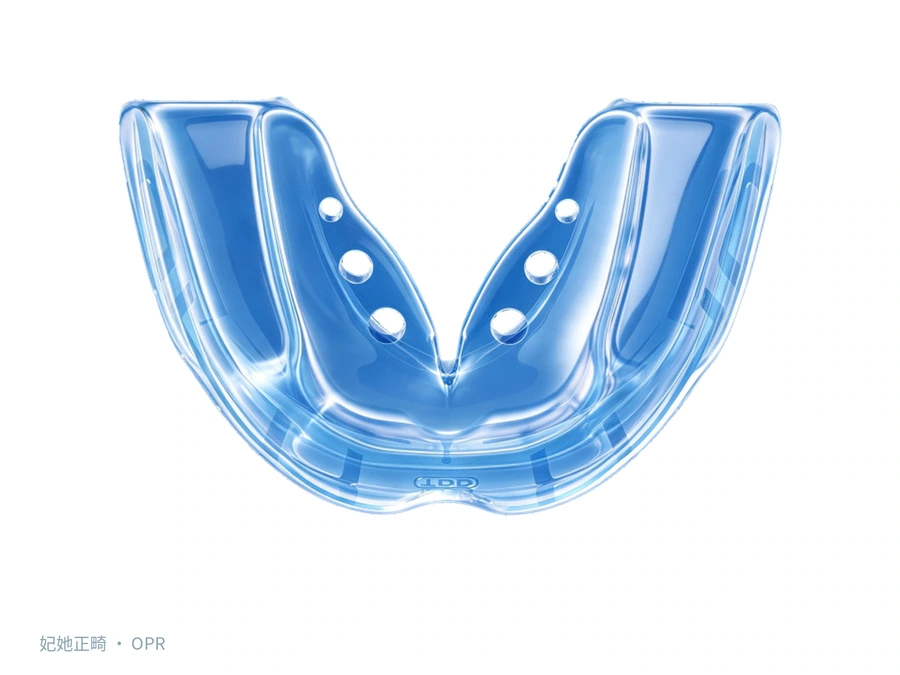
Buccal shields and arch guidance features for selected posterior arch-width requirements.
Structure: Posterior buccal shields accompany arch guidance in selected narrow arches with relatively upright posterior teeth. The design considers width and axial inclination together.
Sizes: TXD-M: reference age 8–10; TXD-L: 10–12.
Use and review: Assess the nature of the transverse discrepancy and suitable expansion approach. Review arch width, posterior inclination, shield fit, contacts and gingival condition.
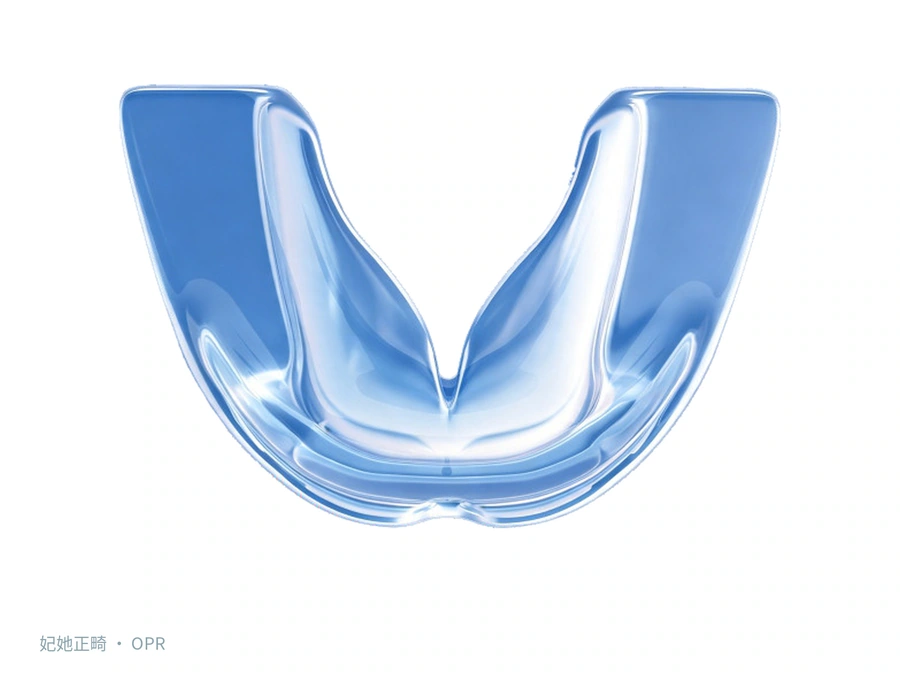
Designed for selected narrow dental arches with lingually inclined posterior teeth.
Structure: A design without posterior buccal shields uses arch-form guidance and elastic contact for selected lingually inclined posterior teeth.
Sizes: TX-M: reference age 8–10; TX-L: 10–12.
Use and review: For cases assessed as suitable for posterior uprighting and dentoalveolar expansion. Review width, inclination, contacts and periodontal response.
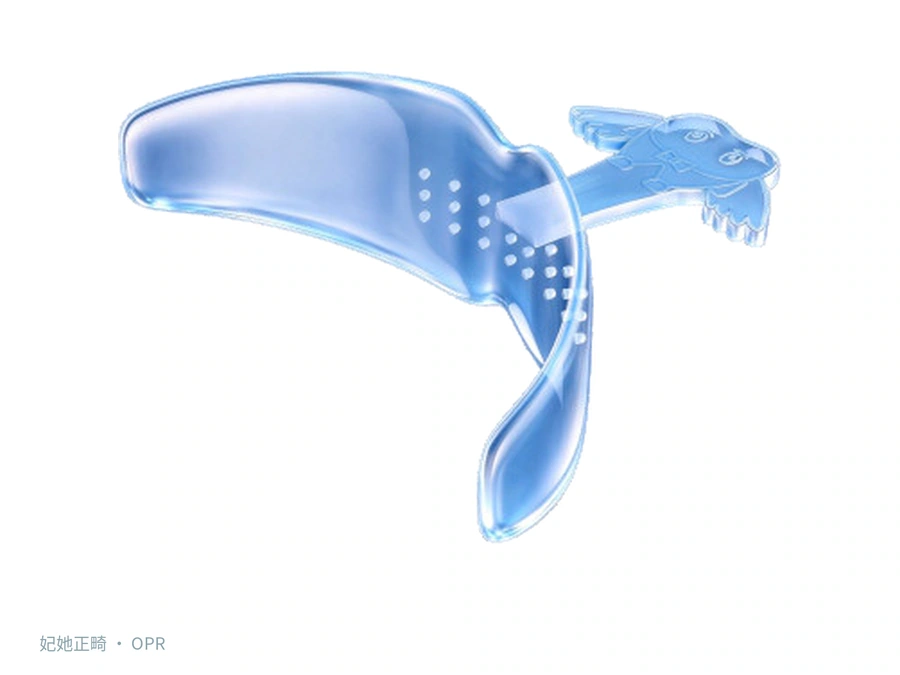
A removable device worn between the lips or cheeks and teeth for clinician-directed lip and oral habit exercises.
Structure: An arched shield and anterior traction feature form a flexible device for clinician-guided lip-resistance exercises.
Sizes: The clinician selects the size by dentition stage, vestibular dimensions and fit.
Use and review: Habitual open-mouth posture or mouth breathing requires assessment of nasal patency and airway concerns first; do not force closed-lip wear. Remove the device and contact the clinician if pain, mucosal injury or breathing discomfort occurs.
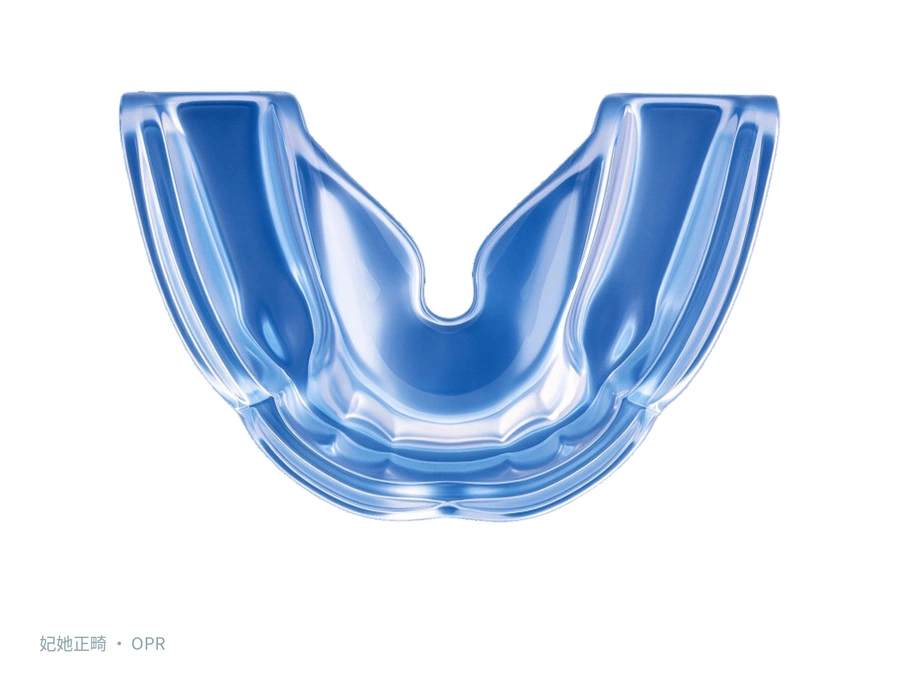
Bilateral tongue supports provide positional cues for active tongue-elevation exercises.
Structure: A U-shaped lower-arch positioning area and lingual supports provide rounded, flexible surfaces for active tongue-elevation and position-awareness exercises.
Sizes: Select and trial-fit under professional guidance, checking intraoral fit and soft-tissue contact.
Use and review: May support tongue-position and swallowing-related exercises following professional assessment. Avoid forceful clenching or chewing. Remove and report significant pain, mucosal injury or breathing discomfort.
For dental professionals. Appliance selection, treatment planning, wear schedules and follow-up are determined by the treating clinician and the relevant product instructions.
WORK WITH FEITA
Product information, custom manufacturing and technical support for dental professionals and distribution partners.